Define Customer Activation (“First Value”) in One Sentence
Define “activation” (first value) in one sentence, add 3 observable signals, and remove the top blockers so new customers reach value faster.
📌 Summary
Outcome: Everyone on your team shares the same definition of “activation” (first value), so onboarding and retention improve.
Time: 30–45 minutes setup, then 10 minutes/month to refine.
Owner: Founder / CS owner / Product owner (whoever owns onboarding).
Steps: Pick one customer segment → define “first value” in one sentence → list 3 observable signals → remove friction → review weekly.
Metrics: Time-to-first-value (TTFV), activation rate, early churn/returns, onboarding completion.
🎯 What you’ll achieve (in 2 weeks)
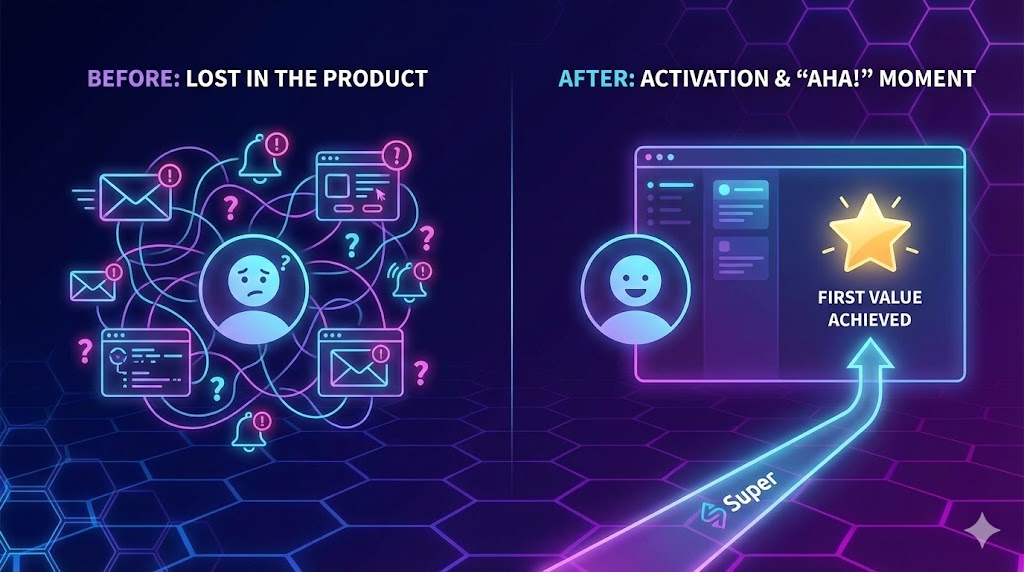
A clear, measurable definition of “first value” that drives onboarding actions.
Fewer customers who “signed up but didn’t get it.”
A simple north star for onboarding improvements.
⏱️ Time & effort
Setup: 30–45 minutes
Ongoing: 10 minutes/month (plus weekly monitoring if you want)
Owner: Founder / CS / Product owner
Dependencies: Minimal customer activity data (manual is fine)
🚦 When to use this (signals)
Use this quick win if:
Customers ask for help right after signing up (“what do I do next?”).
You have lots of signups but low usage / repeat behavior.
Your onboarding is a list of steps, not a path to value.
Different teammates define “success” differently.
🧩 Step-by-step (follow in order)
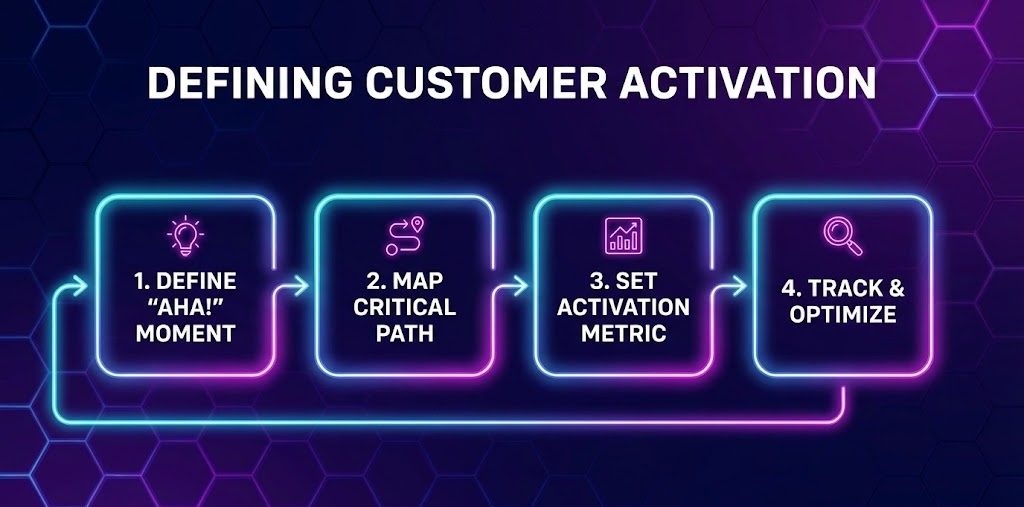
Step 1) Pick ONE segment to define activation for
Activation is not the same for everyone. Start with your most important segment:
highest revenue customers
most common customer type
new customers in first 14–30 days
Rule: One segment first. You can create variations later.
Step 2) Write “activation” in one sentence (your First Value Definition)
Use this structure:
A customer is activated when they [GET A REAL OUTCOME] by doing [ONE CORE ACTION] within [TIME WINDOW].
Examples (mixed, reusable):
B2B SaaS: “A customer is activated when they invite 2 teammates and complete their first workflow within 7 days.”
Ecommerce (subscription/repeat): “A customer is activated when they place a second order within 45 days.”
Services: “A client is activated when they approve the scope and attend the kickoff call within 10 days.”
Keep it outcome-based and observable.
Step 3) Define 3 observable signals (so it’s measurable)
Pick 3 signals that indicate “first value happened”:
one usage/action signal (did the core thing)
one progress signal (moved forward)
one friction signal (low support needed / no blockers)
Examples:
“Completed first setup”
“Submitted first request/order”
“Received first deliverable”
“No open ‘blocked’ tickets after 7 days”
Rule: If you can’t measure it, it’s not a signal.
Step 4) Identify the 3 biggest blockers to reaching first value
Ask: “What stops a new customer from reaching activation?”
Common blockers:
too many steps
unclear next action
missing data / integrations
slow response time
lack of trust (uncertainty, security, pricing confusion)
Write the top 3. Don’t do more.
Step 5) Remove friction with one small change per blocker
Examples of small, high-leverage fixes:
Add a “Next step” checklist on the welcome email / thank-you page
Pre-fill defaults or provide a sample template
Shorten onboarding to the minimum required for first value
Trigger a human check-in for “stuck” customers (no signal by day X)
Step 6) Review weekly (lightweight) for new customers
Once a week, look at new customers from the last 14–30 days:
How many reached activation?
What step did non-activated customers get stuck on?
What’s the one change you’ll test next?
✅ Done Definition (DoD)
You’re “done” when:
Activation (“first value”) is defined in one sentence
It’s tied to a time window (e.g., 7/14/30/45 days)
You defined 3 observable signals
You listed the top 3 blockers and 1 fix per blocker
Activation is reviewed weekly or monthly
⚠️ Common mistakes (avoid these)
Mistake: Defining activation as “signed up” → Do this instead: tie it to a real outcome or core action.
Mistake: Too many activation goals → Do this instead: one first-value moment per segment.
Mistake: Purely subjective definitions (“they love it”) → Do this instead: observable signals + thresholds.
Mistake: Onboarding steps that don’t lead to value → Do this instead: design onboarding backwards from first value.
📈 How to know it’s working (in 2 weeks)
New customers reach first value faster (TTFV goes down).
Fewer “confused” tickets in the first week.
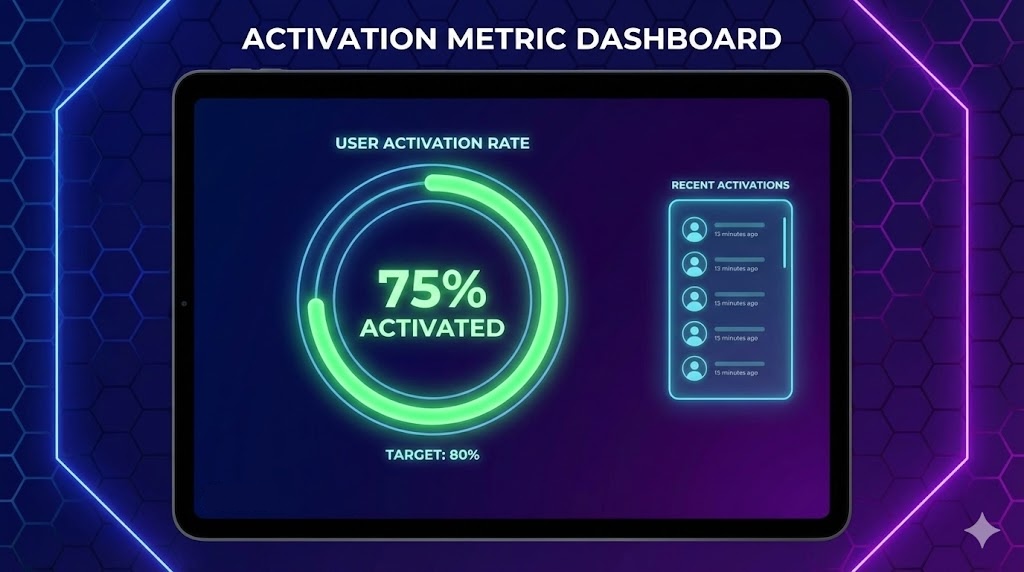
Higher % of customers reach activation within your time window.
More customers naturally move into repeat behavior (renew, reorder, rebook).
❓ FAQ
What if we’re not a product and onboarding is human-led?
Same concept. Define “first value” as the first meaningful outcome (e.g., kickoff completed, first deliverable delivered, first measurable result achieved).
Should activation be the same for all customers?
No. Start with one segment. Add variants only if needed.
What if our cycle is long (e.g., credit underwriting, enterprise onboarding)?
Use a longer time window and define first value as the first meaningful milestone (approval, first disbursement, first report delivered).
🔗 Related quick wins
⚙️ Want this to run automatically?
You can define activation in a doc and track it manually. If you’re using Super, you can track activation signals, identify “stuck” customers automatically, and trigger the right follow-up in one place.