Quarterly Customer Review: Expansion + Renewal Plan
Run a simple quarterly review to label accounts Save/Stabilize/Expand, identify renewal risks early, and create a 90-day action plan for expansion and retention.
📌 Summary
Outcome: You proactively drive renewals and expansion instead of reacting late.
Time: 60 minutes setup, then 60–90 minutes per quarter (plus 10 minutes/week to maintain notes).
Owner: Founder / Account owner / CS owner.
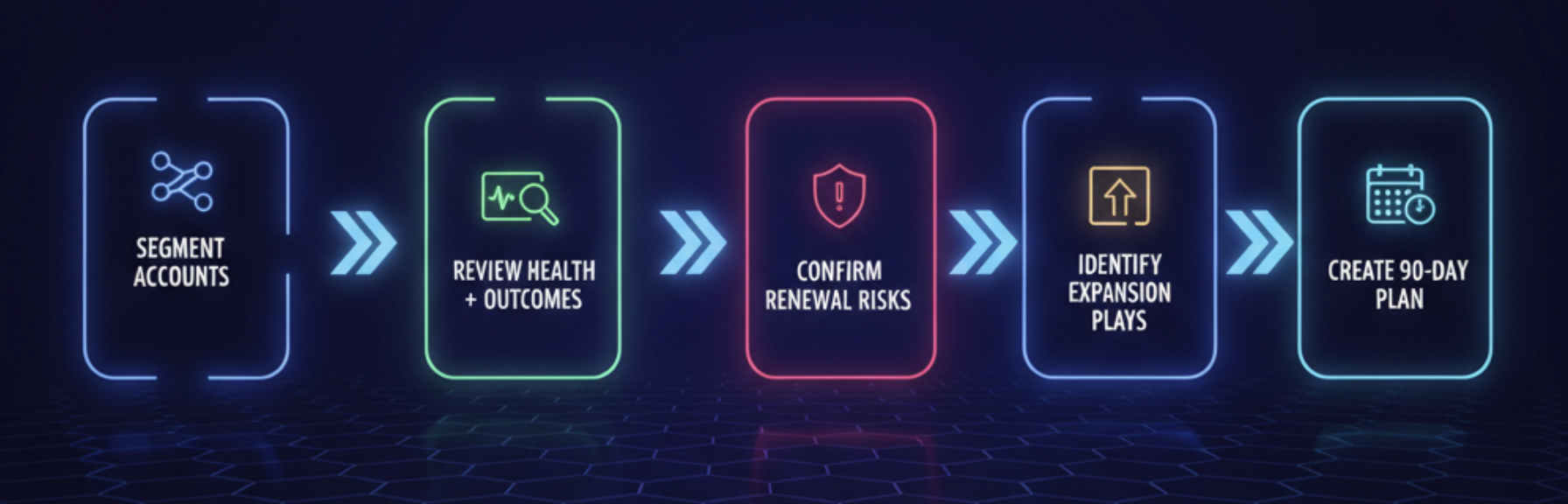
Steps: Segment accounts → review health + outcomes → confirm renewal risks → identify expansion plays → create a 90-day plan.
Metrics: Renewal rate, expansion rate, NRR (if relevant), accounts at risk, pipeline influenced by existing customers.
🎯 What you’ll achieve (in 2 weeks)
A clear list of accounts to save, stabilize, and expand.
Fewer “surprise” churn events.
A simple customer growth plan that doesn’t depend on memory.
⏱️ Time & effort
Setup: 60 minutes
Quarterly review: 60–90 minutes per quarter (for your top accounts)
Owner: Founder / CS / account owner
Dependencies: Basic account data + notes (manual is fine)
🚦 When to use this (signals)
Use this quick win if:
Renewals show up late and feel stressful.
You don’t have a consistent process for account reviews.
Expansion happens randomly (if at all).
Important customers go quiet and you notice too late.
🧩 Step-by-step (follow in order)
Step 1) Choose your “review scope” (start small)
Pick one set for your first quarter:
Top 10–25 accounts by revenue, or
All accounts with renewal in the next 90 days, or
All accounts above a strategic threshold
Rule: Start with 10–25 accounts max, then expand later.
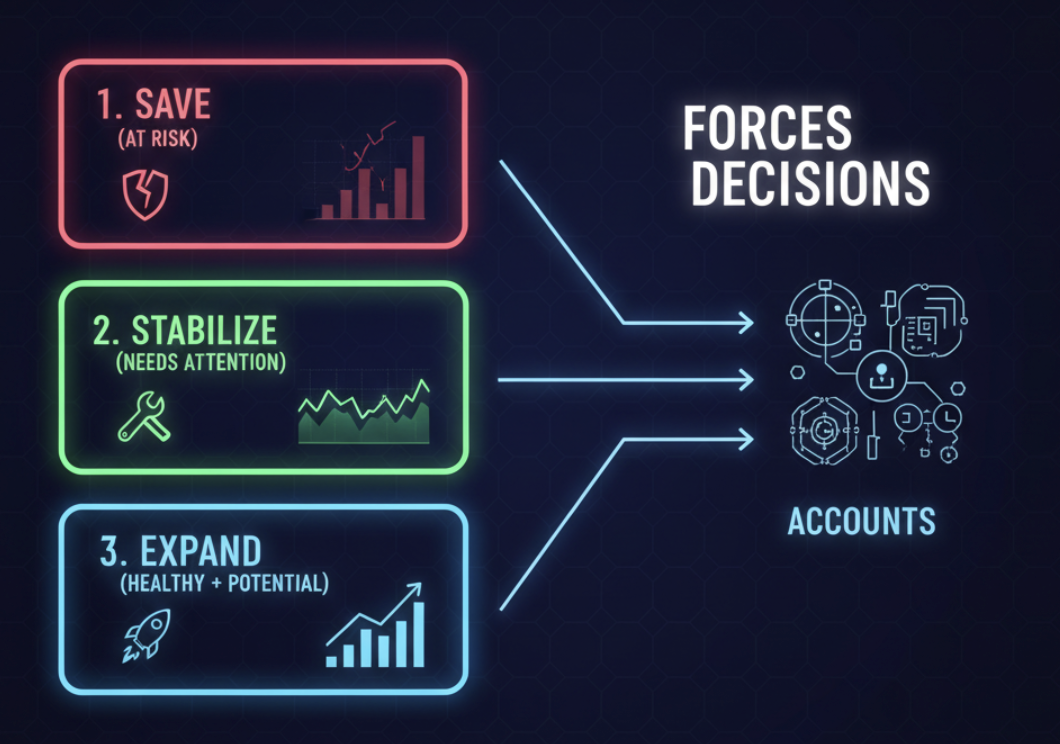
Step 2) Use a simple 3-tier segmentation
For each account, classify:
Save (at risk)
Stabilize (needs attention but not urgent)
Expand (healthy + potential)
This forces decisions.
Step 3) Review 5 things per account (quick, not academic)
For each account, answer:
Outcome delivered: What value did they get in the last quarter?
Usage / engagement: Are they using the core thing that drives value?
Friction: Support load, complaints, blockers, unresolved issues?
Renewal risk: What could cause non-renewal (budget, champion, value gap)?
Expansion hooks: What’s the next use case, add-on, or cross-sell?
Keep notes short. Bullet points only.
Step 4) Create the 90-day action plan (1–3 actions per account)
You’re not building a PowerPoint—just actions.
Save actions (examples)
Schedule a reset call + agree on 1 success metric
Fix the top blocker (owner + due date)
Deliver one quick win that proves value
Stabilize actions
Ensure adoption of the core workflow
Improve communication cadence (monthly check-in)
Document expectations and deliverables
Expand actions
Ask about next quarter priorities
Offer an add-on aligned to their roadmap
Request referral/testimonial after clear value
Step 5) Set the next touchpoints (make it real)
For each account:
one next meeting date
one internal owner
one “success metric” to revisit next quarter
No dates = no plan.
Step 6) Run the quarterly review meeting (60–90 minutes)
Agenda:
Review account list by tier (Save/Stabilize/Expand)
Confirm top 3 risks
Confirm top 3 expansion plays
Assign owners + due dates for actions
✅ Done Definition (DoD)
You’re “done” when:
You reviewed 10–25 accounts (or those renewing in 90 days)
Every account is labeled Save/Stabilize/Expand
Each account has 1–3 actions with an owner
Next touchpoints are scheduled
You can name your top renewal risks and top expansion bets
⚠️ Common mistakes (avoid these)
Mistake: Reviewing everything at once → Do this instead: start with top accounts or next 90-day renewals.
Mistake: Long notes, no actions → Do this instead: bullet notes + 1–3 actions max.
Mistake: No owner/due date → Do this instead: assign owners and put dates on the calendar.
Mistake: Only talking about “relationship” → Do this instead: anchor on outcomes delivered and next outcomes.
Mistake: Waiting until renewal month → Do this instead: run the review quarterly (or monthly for key accounts).
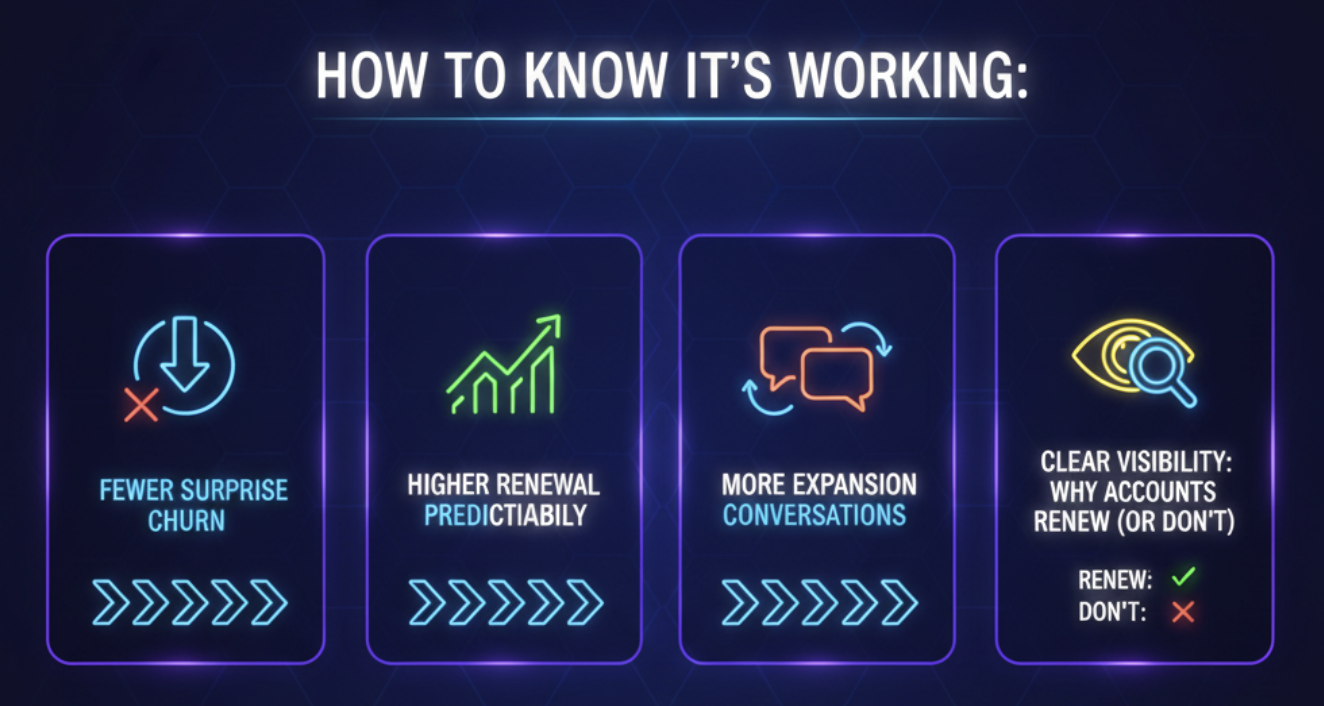
📈 How to know it’s working (in 2 quarters)
Fewer surprise churn events
Higher renewal predictability
More expansion conversations initiated proactively
Clear visibility into why accounts renew (or don’t)
❓ FAQ
What if we have hundreds of customers?
Only review the top 10–25 accounts, or those renewing soon. For everyone else, use "Customer Health Signals and Weekly Review" to surface exceptions.
What if we’re transactional (not renewal-based)?
Use the same structure, but define the goal as “repeat purchase” or “repeat booking,” and expansion as higher frequency/average order value.
Do we need a CRM for this?
No. A simple sheet or table works as long as you keep it consistent.
🔗 Related quick wins
Standard Payment Terms + Weekly Collections Routine (cash impact of renewals)
⚙️ Want this to run automatically?
You can run quarterly reviews with a spreadsheet and calendar reminders. If you’re using Super, you can keep customer notes, health signals, renewals, and next actions in one place—so “Save/Stabilize/Expand” becomes a living workflow, not a quarterly scramble.